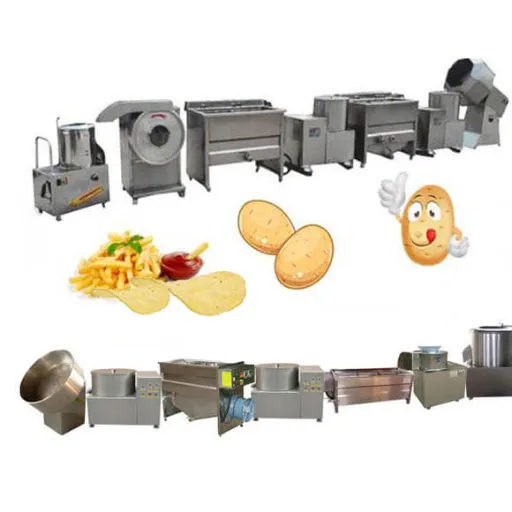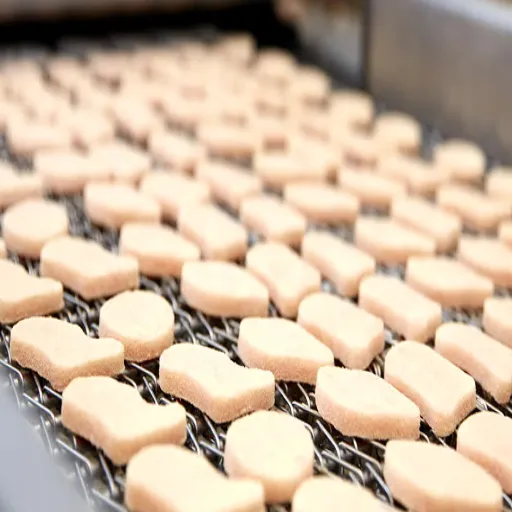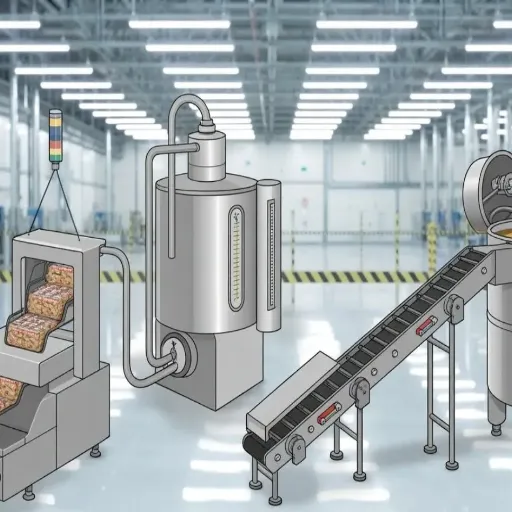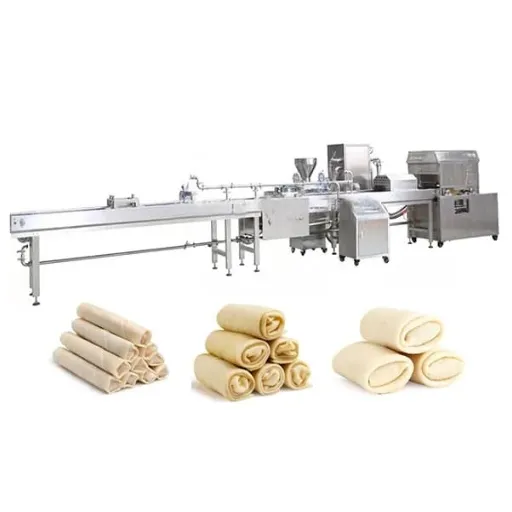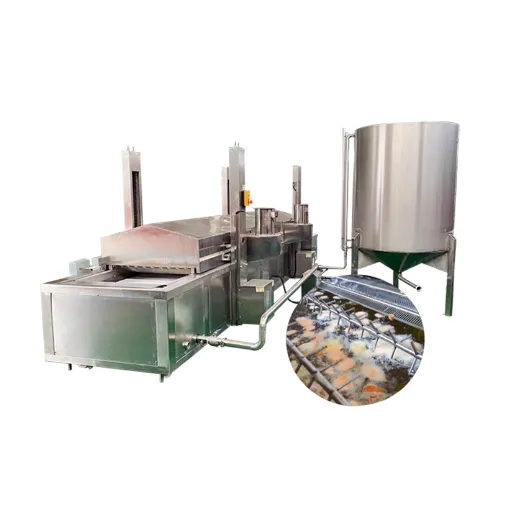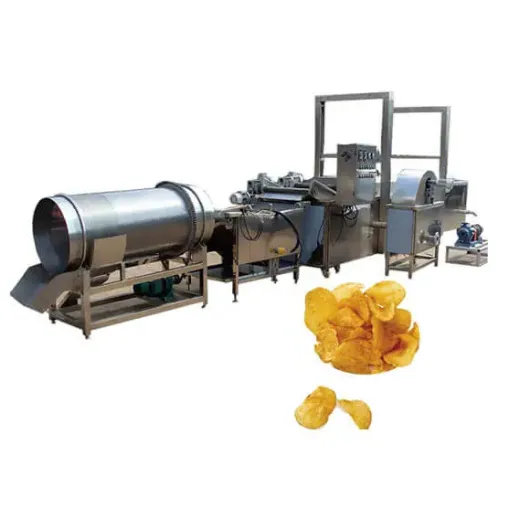
Automatic food processing machines are programmable systems that handle repetitive food manufacturing tasks, mixing, cutting, drying, extruding, and packaging, with minimal human intervention. They follow pre-loaded digital recipes to transform raw ingredients into finished products consistently, shift after shift.
That definition covers the “what.” But if you are new to food manufacturing, you probably want to know the “how” and the “so what.” In 2024, Amir, a former restaurant owner in Dubai, decided to launch a line of branded puffed snacks. He had the recipes and the market contacts, but he had never set foot inside a production facility. When he searched for equipment, every catalog threw acronyms at him: PLC, HMI, servo, CIP. Six months later, after installing a semi-automatic extrusion and drying line, his facility produces 300 kg of snacks per hour with three operators. “I thought automatic meant no people,” he told us. “Turns out it means the people do smarter work while the machine handles the boring stuff.”
That is the reality this guide will unpack. You will learn exactly what automatic food processing machines are, how they work from raw material to packaged product, what the main components do in plain language, and how to tell if your business is ready for automation. No engineering degree required.
關鍵要點
- Automatic food processing machines are programmable systems that execute repetitive tasks using PLCs, sensors, and motors to deliver consistent output with minimal human contact.
- The core workflow has five stages: ingredient intake, processing, quality control, packaging, and palletizing, all linked by conveyors and controlled by a central computer.
- Semi-automatic machines handle the core task but need human loading and monitoring; fully automatic lines run continuous production with only supervisory staff.
- Entry-level semi-automatic units start around 500-500 - 5,000; fully automatic production lines range from 第六名50,000to200,000+ depending on capacity and customization.
- Automation does not eliminate workers. It shifts them from repetitive manual labor to roles in monitoring, quality assurance, and maintenance.
什麼是自動化食品加工機械?
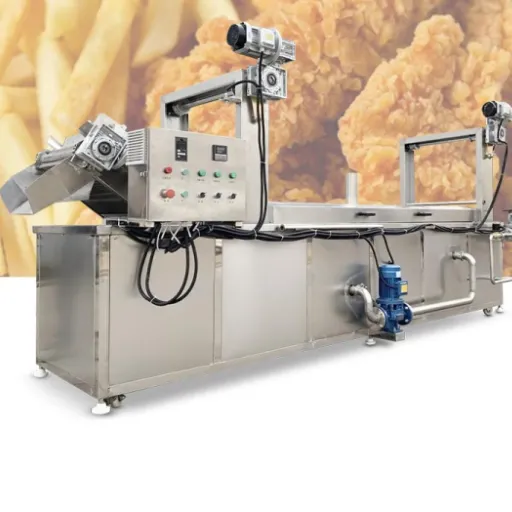
Automatic food processing machines are industrial equipment designed to perform one or more stages of food production without constant human control. Think of them as large, rugged, programmable kitchen appliances. An operator loads a digital recipe, the machine follows precise instructions for timing, temperature, speed, and pressure, and the result is a batch of product that matches the last batch almost exactly.
These machines differ from manual equipment in one critical way. A manual mixer requires a person to add ingredients, set the timer, check consistency, and stop the cycle. An automatic mixer meters ingredients via sensors, runs the cycle according to a programmed recipe, and alerts the operator only when the batch is complete or an alarm triggers. The human role shifts from doing the work to supervising the work.
Curious about the full range of equipment available? 瀏覽我們 食品加工機械 to see configurations for snacks, pasta, cereals, and more.
How Automatic Food Processing Machines Work: The Five-Step Workflow
Understanding how automatic food processing machines work is easier if you trace a real product through a line. Imagine a snack producer making puffed corn rings. Here is what happens from flour to sealed bag.
Step 1: Ingredient Intake and Metering
Raw materials enter the system through hoppers, conveyors, or vacuum feeders. Load cells and flow sensors measure exact quantities of flour, water, oil, and seasoning. If the recipe calls for 48.5 kg of flour and 12.3 liters of water, the machine delivers those amounts within a tight tolerance. No guessing, no scooping, no variance between batches.
步驟2:處理
This is where the transformation happens. In our snack example, a twin-screw extruder heats and pressurizes the dough, then forces it through a die to create the ring shape. The extruded pieces are still moist and soft. They move by conveyor into a dryer, often a 微波烘乾機 or hot-air tunnel, that removes moisture to the exact specification, maybe 3-4% final moisture content. The result is a crisp, shelf-stable snack base ready for seasoning.
Step 3: Quality Control and Sorting
Before packaging, the product passes through inspection stations. Metal detectors catch any stray fragments from upstream equipment. Check-weighers confirm each batch meets the target weight. Vision systems, increasingly powered by artificial intelligence, spot discoloration, broken pieces, or foreign objects. Defective items are automatically rejected into a separate stream. This inline quality control is one reason automated lines achieve near-uniform consistency.
第 4 步:包裝和標籤
A form-fill-seal machine portions the snacks into bags, fills them with nitrogen to extend shelf life, seals the package, and prints the batch code and expiration date. All of this happens inline, meaning the product never stops moving from the dryer to the sealed bag. The packaging machine communicates with the upstream dryer via the central control system, so if the dryer slows, the packaging line adjusts automatically.
Step 5: Palletizing and Storage
Robotic arms or automated conveyors move the finished cases to palletizing stations. Each pallet is labeled with a lot number that traces back to the exact batch, ingredient source, and operator shift. This traceability is essential for food safety audits, recalls, and export compliance.
Want to see how a full production line comes together? 我們的 食品生產線設備 shows integrated configurations from intake to packaging.
The Anatomy of an Automatic Food Processing Machine
If you strip away the stainless steel外壳, every automatic food processing machine has the same five building blocks. Understanding them demystifies the technology and helps you ask smarter questions when talking to suppliers.
The Brain: PLC (Programmable Logic Controller)
The PLC is a ruggedized industrial computer that lives inside an electrical cabinet. It collects the input from sensors, runs the recipe logic, and controls the motors and valves. Consider this the conductor of the orchestra. It does not play any instrument itself, but it tells every musician exactly when to play and how loud. Modern PLCs can store hundreds of recipes, so switching from corn rings to cheese puffs takes minutes, not hours.
The Muscles: Servo Motors and Drives
Servo motors provide precise, repeatable motion. Unlike standard motors that just spin, servo motors know exactly where they are and how far they have moved. A servo-driven cutting blade, for example, can slice dough into 45-gram portions with a tolerance of less than 1%. That precision is what eliminates the weight variance that plagues manual operations.
The Senses: Sensors and Feedback Loops
Sensors are the eyes and ears of the system. Weight sensors confirm ingredient ratios. Temperature probes monitor cooking and drying. Vision cameras inspect product shape and color. Proximity sensors detect whether a package is present before the seal bar closes. All of this data feeds back to the PLC in real time, creating a closed loop where the machine corrects itself before a bad batch forms.
The Interface: HMI Touchscreen Panel
The Human-Machine Interface is the touchscreen where operators interact with the equipment. It displays production speed, batch count, alarm status, and trend graphs. A well-designed HMI turns complex machinery into something a new operator can learn in a few shifts. It also logs data for traceability and maintenance planning.
The Body: Frame, Conveyors, and Contact Surfaces
Everything that touches food is built from food-grade stainless steel, typically 304 or 316 grade. Surfaces are polished smooth to prevent bacterial buildup. Welds are ground flush. Seals are FDA-compliant. The frame is designed for washdown, meaning operators can spray the machine with cleaning chemicals and water without damaging electronics.
Levels of Automation: Manual, Semi-Automatic, and Fully Automatic
Not all automatic food processing machines are equally automatic. The industry recognizes three levels, and choosing the right one is often more important than choosing the right brand.
| 水平 | What the Human Does | What the Machine Does | 典型成本 | 最適合 |
|---|---|---|---|---|
| 手動操作 | Performs every task: loading, mixing, monitoring, packaging | Provides basic mechanical function only (e.g., a mixer bowl spins) | 500-500 - 5,000 | Startups, artisan products, under 80 kg/hr |
| 半自動 | Loads materials, monitors screens, handles packaging | Executes core processing tasks continuously (mixing, extruding, drying) | 10,000-10,000 - 50,000 | Growing SMEs, 100-400 kg/hr, recipe flexibility needed |
| 全自動 | Supervises from HMI, handles exceptions and changeovers | Runs complete production from intake to palletizing with minimal intervention | 50,000-50,000 - 200,000+ | Large-scale, 300+ kg/hr, strict hygiene standards |
The smartest path for most growing manufacturers is staged: start semi-automatic to prove demand, then upgrade modules to fully automatic as volume justifies the investment. Loyal’s 工業食品加工設備 supports this modular scaling, so you do not rebuild your line from scratch every time you grow.
自動食品加工機械的種類詳解
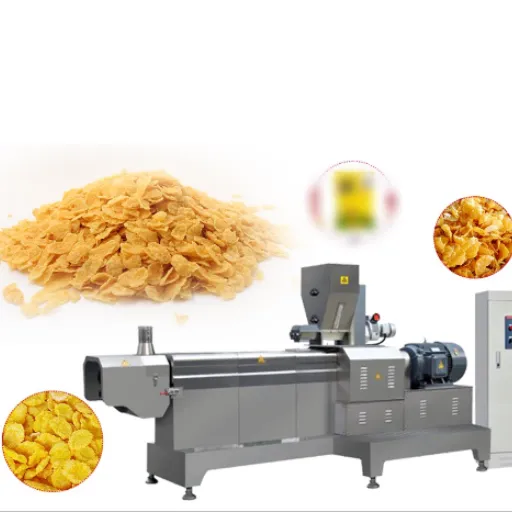
The term “automatic food processing machines” covers a wide family of equipment. Here is what each major type actually produces, so you can match the machine to your product idea.
混合攪拌設備
These machines combine dry and wet ingredients into uniform batters, doughs, or seasonings. A typical unit uses a jacketed bowl with a rotating paddle or sigma blade, heated or cooled as needed. Automatic versions meter ingredients by weight, run the mix cycle to a programmed torque or temperature endpoint, and discharge the batch into the next process stage.
Extrusion and Forming Machines
Extruders are the workhorses of the snack world. They cook and shape products in one continuous operation by applying heat, pressure, and mechanical shear. What comes out depends on the die: rings, puffs, sticks, or flat chips. A 休閒食品生產線 built around an extruder can produce 200-800 kg/hr of finished snacks with just two or three operators.
乾燥和熱處理
Drying removes moisture to prevent spoilage and create the right texture. Microwave dryers use electromagnetic energy to heat water molecules directly, which reduces drying time by 60-80% compared to hot-air ovens and preserves color and flavor better. Loyal’s 微波烘乾機 lines are a good example of how automated thermal processing can elevate product quality while cutting energy use.
切割、切片和切丁系統
Automatic cutters use rotating blades, ultrasonic knives, or water jets to portion products with extreme consistency. A servo-driven slicer can cut meat or vegetables to a thickness tolerance of half a millimeter, far beyond what a human operator can sustain over an eight-hour shift.
灌裝、包裝和封口生產線
These machines turn bulk product into retail-ready units. Form-fill-seal machines create a bag from a roll of film, fill it, and seal it inline. Cartoners fold and glue boxes around primary packages. Labelers apply front, back, and top labels at speeds of 100-300 units per minute. All of this is coordinated by the same PLC that controls upstream processing.
Inspection and Sorting Systems
The final gatekeepers. X-ray machines detect dense contaminants like glass or stone. Metal detectors catch ferrous and non-ferrous fragments. Optical sorters use cameras and air jets to eject off-color or misshapen pieces at rates exceeding 100 items per second. AI-powered inspection systems deployed in 2025-2026 are now achieving 98% accuracy in micro-defect detection.
Do Automatic Food Processing Machines Displace Workers?
This is the question every plant manager gets from their team. The honest answer is no. Automatic food processing machines change what workers do, but they do not eliminate the need for people.
Here is what operators actually do on an automatic line:
- Monitor the HMI screens for alarms and performance trends
- Load raw materials into hoppers and verify ingredient lots
- Perform changeovers when switching from one product to another
- Conduct pre-shift sanitation and daily maintenance checks
- Troubleshoot jams, misfeeds, and quality deviations
- Record batch data for traceability and compliance
What automation eliminates is repetitive strain injuries, fatigue-driven quality drift, and the tedium of tasks like hand-weighing 10,000 portions per shift. Workers typically move into higher-skill, higher-wage roles as machine technicians, quality auditors, or process optimizers. That is why the food automation market is growing fastest in regions with labor shortages, not just high wages.
How Expensive Are Automatic Food Processing Machines?
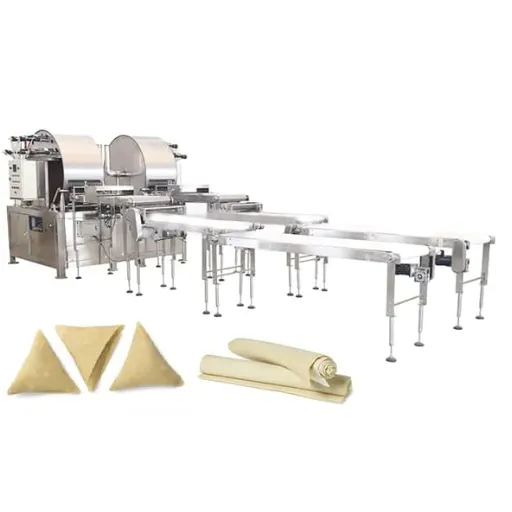
Cost is always context-dependent, but here are the ranges we see across Loyal’s global customer base.
- Entry-level semi-automatic units: 500-500 - 5,000 for single-station equipment like small mixers, tabletop fillers, or basic extruders.
- Mid-range automatic machines: 10,000-10,000 - 50,000 for standalone units with full PLC control, servo drives, and HMI panels.
- Fully automatic production lines: 50,000-50,000 - 200,000+ for integrated systems that handle intake through packaging.
Several factors drive the price. Capacity is the biggest: a 100 kg/hr line costs a fraction of an 800 kg/hr line. Automation level matters too. Material quality affects both price and longevity: 316 stainless steel costs more than 304 but lasts longer in acidic or salty environments. Customization, special dies, recipe software, and after-sales service packages all add to the total.
A practical rule of thumb: full automation becomes cost-effective when you are producing around 3,000 units or more per day consistently. Below that, semi-automatic equipment usually delivers the best return on investment.
Looking for equipment sized to your budget and volume? Contact our team for a tailored recommendation across our full range of 食品加工機械.
常見問題(FAQ)
What is the difference between a PLC and a regular computer?
A PLC is built for industrial environments. It tolerates vibration, dust, temperature swings, and power fluctuations that would destroy a standard PC. It also runs real-time operating systems, meaning it responds to sensor inputs in milliseconds. A desktop computer might take seconds to process the same data, which is far too slow for a machine cutting 200 portions per minute.
Can Small Businesses Afford Automatic Food Processing Machines?
Yes. The perception that automation is only for large factories is outdated. Entry-level semi-automatic mixers, extruders, and dryers start under $5,000. Many small producers begin with one automatic machine, prove their market, and expand. The key is matching the machine to your actual daily output, not your five-year ambition.
How long does it take to train staff on automatic equipment?
Most operators can learn basic HMI navigation and alarm response in 2-3 days. Full proficiency, including changeovers, troubleshooting, and sanitation protocols, typically takes 2-4 weeks. Modern touchscreens and recipe-based operation have made training far shorter than the old button-and-dial era.
What Certifications Should Automatic Food Processing Machines Have?
For most markets, look for CE marking (European compliance), FDA compliance for food contact materials, and ISO 9001 for quality management. If you export to specific regions, additional certifications like UL (North America), GOST-R (Russia), or SASO (Middle East) may be required. HACCP compatibility is essential for any food safety audit.
Do automatic machines work for recipes that change often?
Yes, but the level of automation should match your changeover frequency. If you switch recipes daily, semi-automatic equipment with tool-less changeover features is usually better than a fully automatic line optimized for long runs. Look for machines with quick-release dies, recipe storage on the HMI, and clean-in-place systems that reduce downtime between batches.
將其整合在一起
Automatic food processing machines are not mysterious black boxes. They are programmable systems built from five familiar components: a computer brain (PLC), precision motors (servos), sensors, a touchscreen interface, and a food-grade frame. Together, they execute a five-step workflow that transforms raw ingredients into consistent, safe, packaged products.
What automatic food processing machines are, at their core, is a way to remove human error from repetitive tasks while elevating your team into roles that require judgment, creativity, and oversight. They come in semi-automatic and fully automatic levels, so you can scale your investment alongside your demand. And they are more accessible than ever, with entry points starting below $5,000.
If you are exploring automation for the first time, start with one question: what is the one step in your current process that causes the most inconsistency, waste, or delay? That is usually the right place to automate first.
Ready to explore how automatic food processing machines could fit your operation? Shandong Loyal Industrial has engineered 食品加工機械 for 650+ manufacturers across 80+ countries. From snack extrusion to microwave drying to turnkey production lines, we build equipment that matches your stage, not just your ambitions. 與我們的團隊交談 for a no-obligation assessment tailored to your product and budget.